
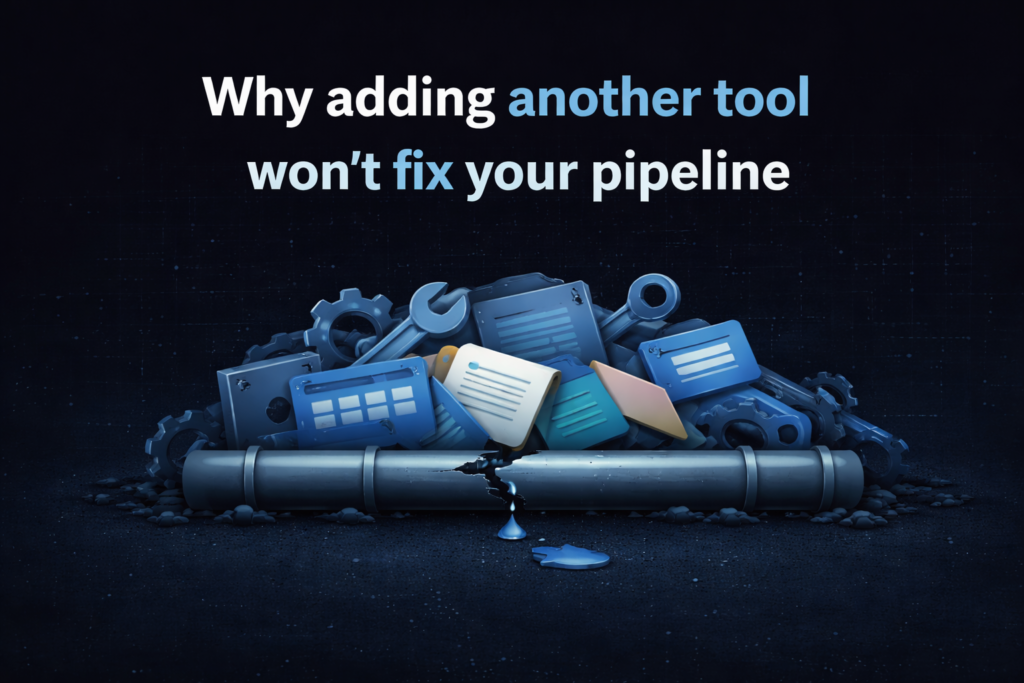
Your GTM stack isn’t broken. Your architecture is.
Most GTM teams don’t suffer from bad tools. They suffer from un-orchestrated ones.
CRMs, enrichment tools, sequencing platforms, automation layers… all best-in-class, all doing their jobs… in isolation.
Buying tools is easy. Designing a system is not.
A real GTM architecture answers:
- What flows where?
- What triggers what?
- What happens automatically?
- When do humans step in?
Without that, your stack becomes a collection of features, not leverage.
This is where GTM engineering actually matters. Not as “RevOps with better tools,” but as a discipline focused on:
- orchestration
- decision logic
- clean handoffs between systems and people
The goal isn’t automation for its own sake. It’s fewer manual decisions for reps.
In many SalesMint projects, we don’t add tools at all. We rewire:
- routing logic
- enrichment priorities
- signal handling
- CRM updates
Same stack. Completely different outcome.
A useful question to ask: Where does your stack rely on humans to compensate for missing logic?
That’s usually where architecture (not tooling) needs work.
Next edition: what high-performing GTM teams actually invest in.