
Scale doesn’t create GTM problems.
It reveals them.
At small size, weak systems hide behind:
- heroic reps
- tight feedback loops
- tribal knowledge
At scale, those protections disappear.
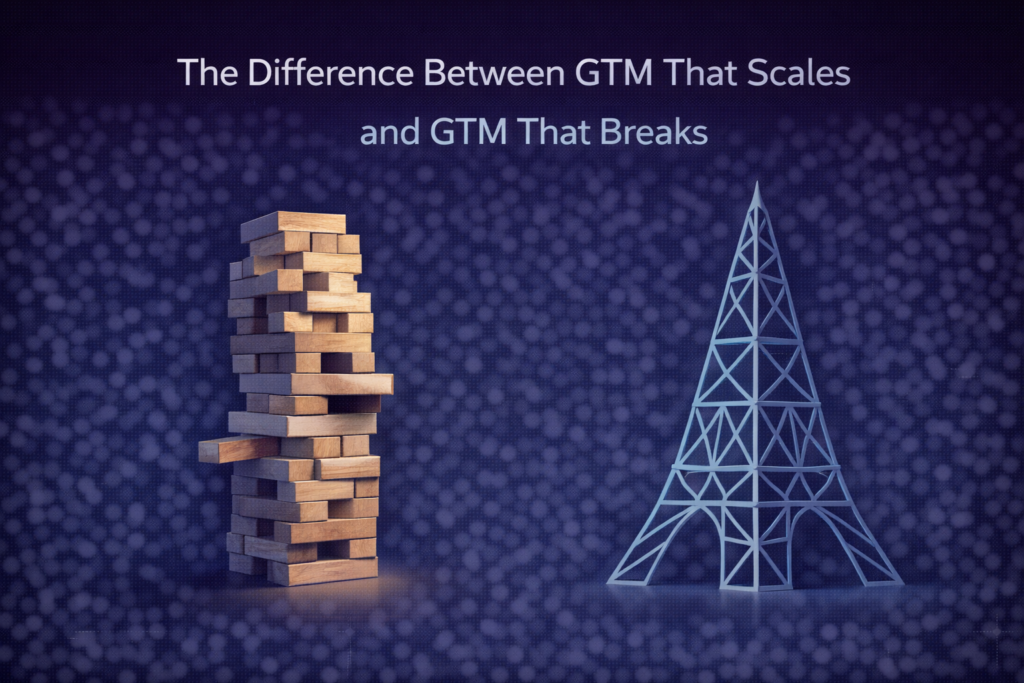
Linear GTM scaling looks like this:
- more reps
- more volume
- more tools
- more management layers
It works… for a while.
Until coordination costs rise faster than output.
Compounding GTM systems scale differently.
They invest in:
- decision logic, not just headcount
- prioritization, not just coverage
- systems that reduce judgment calls instead of adding them
One compounds.
The other fractures.
This is where CROs and RevOps feel the pain differently.
CROs see:
- unpredictable outcomes
- fragile forecasts
- diminishing returns on hiring
RevOps sees:
- increased complexity
- brittle processes
- constant exceptions
Same root cause:
systems designed for a smaller version of the business.
In practice, GTM that scales has one tell:
As the company grows, clarity increases.
GTM that breaks shows the opposite:
As the company grows, ambiguity spreads.
Ask yourself:
👉 As you scaled, did GTM decisions become easier, or louder?
The answer usually tells you which path you’re on.
Next edition: why “alignment” is usually theater, and how to spot the real thing.