
Most GTM teams say they’re aligned.
They meet regularly.
They share dashboards.
They agree on goals.
And yet… nothing quite clicks.
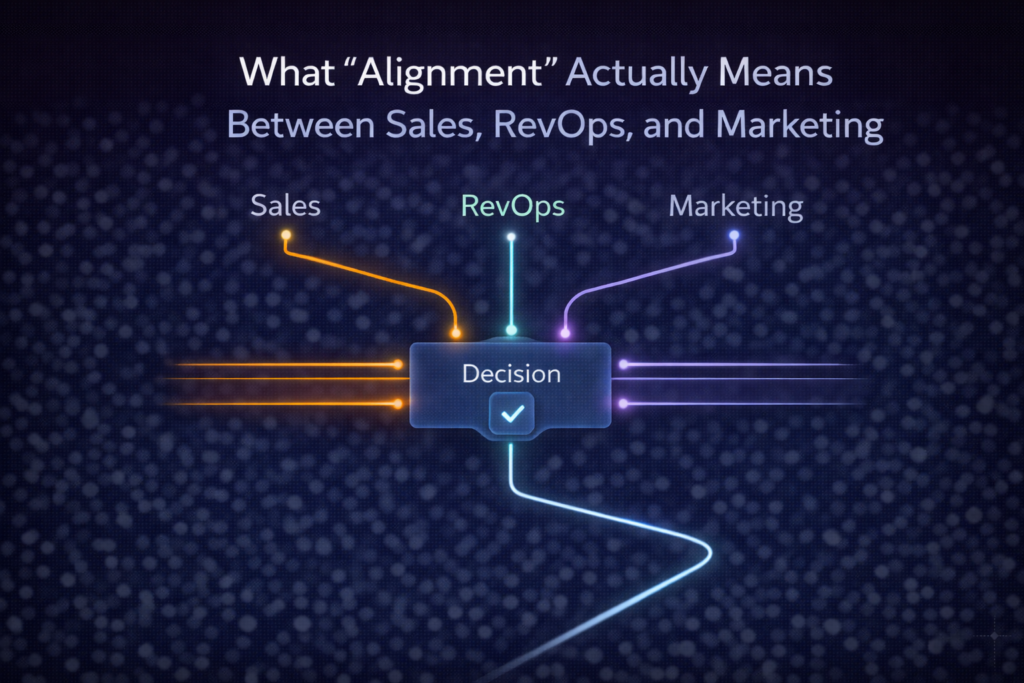
That’s because alignment isn’t agreement.
It’s shared decision logic.
Alignment theater looks like:
- Sales chasing volume
- Marketing optimizing for leads
- RevOps cleaning up the mess
- Everyone nodding in the same meeting
No one disagrees, but nothing improves.
Real alignment shows up in three places:
1. Incentives
People always optimize for what they’re rewarded on.
If incentives conflict, alignment is impossible.
2. Definitions
If “good lead,” “qualified,” or “priority” mean different things to different teams, the system will fragment.
3. Decision rules
Who acts when X happens?
What changes when Y signal appears?
What gets deprioritized when capacity tightens?
Most teams never write these down.
When signals, segmentation, and timing flow cleanly across functions, alignment stops being a meeting topic.
It becomes operational.
Alignment improves fastest when teams stop asking:
“Are we aligned?”
And start asking:
“Would we all make the same decision with this information?”
If the answer is no, alignment is still theoretical.
A quick check:
👉 Where do handoffs still require explanation instead of execution?
That’s where alignment is breaking.
Next edition: why many GTM metrics quietly push teams in the wrong direction.