
Most leaders understand technical debt.
You move fast.
You cut corners.
Eventually, you pay it back.
Process debt is sneakier.
And in GTM, it’s often more dangerous.
Process debt accumulates when:
- shortcuts become norms
- exceptions become standard practice
- workarounds replace systems
- “we’ll fix this later” becomes permanent
Unlike technical debt, it doesn’t live in code.
It lives in habits.
The problem isn’t inefficiency.
It’s fragility.
Process debt makes GTM:
- harder to change
- harder to debug
- harder to scale
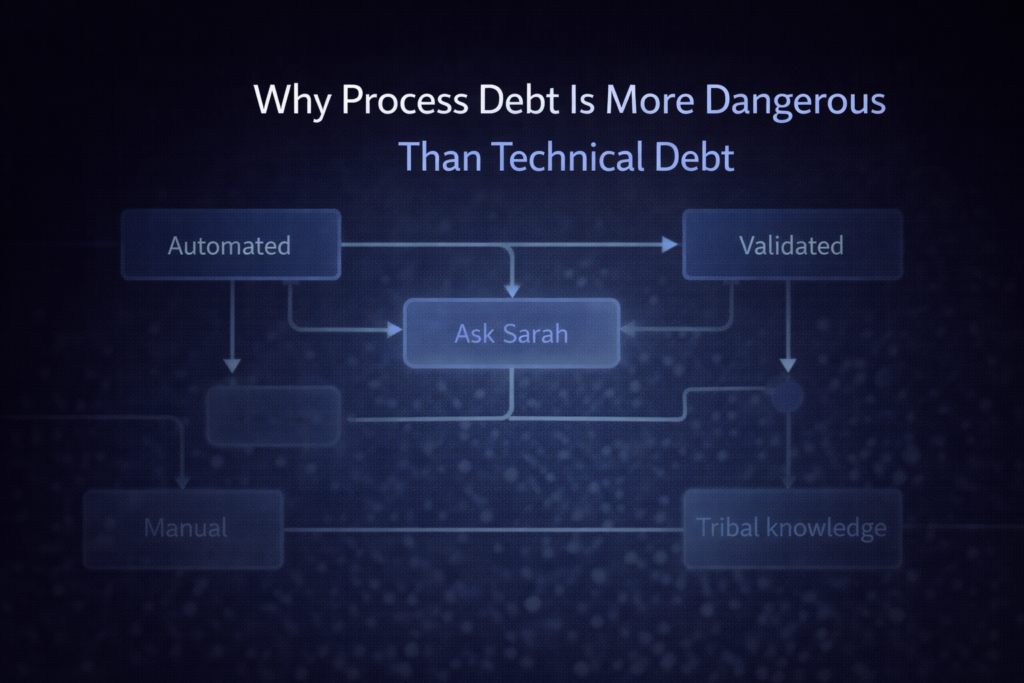
- dependent on specific people
And the worst part?
It feels productive… until it breaks.
RevOps often ends up managing the symptoms:
- documentation
- training
- cleanup
- guardrails
GTM engineering addresses the cause:
- encoding decisions
- removing unnecessary judgment
- rebuilding brittle workflows
- simplifying how work actually happens
Together, they reduce future debt instead of servicing old debt forever.
In practice, the most effective GTM teams do something counterintuitive:
They invest in removing process.
Fewer steps.
Clearer rules.
Better defaults.
Less debt.
A final diagnostic:
👉 What parts of your GTM motion only work because “certain people know how”?
That’s process debt — and it compounds faster than most teams expect.